
wheelchair measuring guide
Understanding wheelchair dimensions is crucial for user comfort and mobility, as wheelchairs come in standard, lightweight, and pediatric sizes.
A properly fitted wheelchair enhances safety and independence, requiring careful consideration of six basic measurements for optimal support.
Why Accurate Wheelchair Measurements Matter
Precise wheelchair measurements are paramount for ensuring a user’s comfort, safety, and overall well-being. An ill-fitting wheelchair can lead to pressure sores, postural imbalances, and difficulty maneuvering, significantly impacting quality of life;

Correct sizing directly influences a user’s ability to self-propel efficiently, minimizing strain and maximizing independence. A wheelchair that’s too wide restricts access through doorways, while one that’s too narrow can cause discomfort and skin irritation.
Furthermore, accurate measurements are vital for proper support, particularly regarding seat depth and back height, which contribute to spinal alignment and prevent fatigue. Selecting the right size, whether standard, lightweight, or pediatric, is not merely about convenience; it’s about promoting long-term health and functionality;
Ultimately, investing time in precise measurements ensures the wheelchair serves as a supportive tool, rather than a source of discomfort or limitation.
Types of Wheelchairs & Sizing Considerations
Wheelchairs aren’t one-size-fits-all; they come in diverse types, each with unique sizing considerations. Standard wheelchairs typically range from 18 to 20 inches in seat width, offering a robust build for general use. Lightweight models prioritize portability, often featuring narrower seat widths around 16 inches, ideal for easier maneuverability.
Pediatric wheelchairs are specifically designed for growing children, requiring adjustable features and smaller dimensions to accommodate their developing bodies. Beyond these core types, specialized wheelchairs cater to specific needs, like sports or bariatric requirements.
Sizing isn’t solely about width; seat depth, height, and back height are equally crucial. A thorough assessment considers the user’s body dimensions, functional abilities, and lifestyle to determine the optimal fit. Considering these factors ensures comfort, support, and efficient mobility.

Key Wheelchair Measurements
Essential measurements include seat width, depth, height, back height, armrest height, and overall length, all impacting comfort, function, and maneuverability.
Seat Width: Determining the Correct Fit
Determining the correct seat width is paramount for wheelchair comfort and preventing pressure sores; it’s the foundation of a good fit.
Measure hip width across the widest points, adding approximately 1-2 inches to allow for clothing and comfortable movement – typically 18-20 inches for standard models.
Lightweight wheelchairs can accommodate narrower widths, potentially as low as 16 inches, offering increased maneuverability in tighter spaces.
An improperly sized seat – too narrow or too wide – can lead to discomfort, skin breakdown, and inefficient propulsion.
Ensure there’s a small gap between the user’s hips and the wheelchair armrests, facilitating ease of transfer and preventing pressure build-up.
Prioritize a fit that allows for comfortable arm positioning and prevents the user from sliding side-to-side during movement.

Seat Depth: Ensuring Proper Thigh Support
Proper seat depth is vital for supporting the thighs and preventing pressure behind the knees, contributing significantly to comfort and posture.
Measure from the back of the hip to the back of the knee, subtracting approximately 1-2 inches to avoid pressure on the popliteal fossa (the area behind the knee).
Insufficient seat depth can cause pressure sores and discomfort, while excessive depth hinders proper positioning and efficient propulsion.
A good fit allows for approximately 2-3 inches of space between the back of the knee and the front edge of the seat, promoting circulation.
Consider the user’s individual anatomy and range of motion when determining the optimal seat depth; adjustments may be necessary.
Prioritize a seat depth that supports the thighs without restricting movement or causing discomfort during prolonged sitting.
Seat Height: Impact on Mobility & Transfers
Seat height profoundly impacts a user’s ability to self-propel and transfer independently, influencing both mobility and safety.
Measure from the floor to the popliteal fossa (back of the knee) while the user is seated with their feet flat; typically around 19.5 inches for standard wheelchairs.
Correct seat height allows the user to reach the wheels comfortably for propulsion and facilitates smooth transfers to and from surfaces.
If the seat is too high, reaching the wheels becomes difficult, and transfers are unstable; too low, and propulsion is inefficient.
Footrests should be adjustable to accommodate varying floor surfaces and ensure proper leg support during movement.
Consider the user’s shoe height and any limitations in leg strength or range of motion when determining optimal seat height.
Back Height: Providing Adequate Support
Appropriate back height is essential for providing adequate spinal support and maintaining proper posture while seated in a wheelchair.
Measure from the seat surface to the desired level of back support, considering the user’s torso length and postural needs.
Sufficient back height helps prevent slouching and reduces the risk of pressure sores, promoting comfort and long-term health;
Lower back heights offer greater freedom of movement for active users, while higher backs provide more stability for those with limited trunk control.
Adjustable backrests allow for customization to accommodate individual preferences and changing needs over time.
Consider the user’s ability to maintain an upright posture independently and any existing spinal conditions when determining optimal back height.
Armrest Height: Comfort and Functionality
Correct armrest height is vital for upper body support, reducing strain on the shoulders and neck, and promoting comfortable wheelchair use.
To measure, have the user sit in the wheelchair with their shoulders relaxed and arms bent at a 90-degree angle.
The armrest should support the forearm without causing the shoulders to hunch or the elbows to be excessively raised or lowered.
Adjustable armrests are highly recommended, allowing for personalized positioning and accommodating various activities like eating or working.
Insufficient armrest height can lead to poor posture and discomfort, while excessive height can hinder access to tables and other surfaces.
Consider the user’s arm length, upper body strength, and typical activities when determining the ideal armrest height for optimal functionality.
Wheelchair Length: Considerations for Maneuverability
Wheelchair length significantly impacts maneuverability, particularly in tight spaces like doorways and hallways. A shorter wheelchair generally offers greater agility.
Typical wheelchair length is around 42 inches (106.7 cm), but this can vary depending on the model and user’s needs.
Consider the user’s environment – will they primarily be navigating narrow hallways or open spaces? This dictates the appropriate length.
Longer wheelchairs provide greater stability, which can be beneficial for users with balance concerns, but sacrifice some maneuverability.
When measuring, account for the overall length, including the rear wheels, as this determines the turning radius.
Ensure sufficient space for comfortable foot placement and avoid a length that causes the chair to be unwieldy or difficult to control.

Taking Accurate Measurements
Precise measurements are vital for a comfortable and functional wheelchair fit; utilizing the correct tools and following step-by-step guides is essential.
Tools Needed for Wheelchair Measurement
Accurate wheelchair measurements necessitate a few essential tools to ensure precision and reliability. A flexible measuring tape is paramount, allowing for contouring around the body to capture precise dimensions, unlike rigid rulers. A flat surface, like a firm chair or the floor, provides a stable base for measurements, particularly for seat dimensions.
Consider a right-angle ruler or protractor for verifying squareness of seat and back angles, contributing to postural support. Pencil and paper (or a digital notepad) are crucial for recording measurements systematically, preventing errors. For individuals who cannot sit independently, a second person to assist with positioning and stabilization is invaluable.
Optional, but helpful, tools include a laser measuring device for longer distances like wheelchair length, and a bubble level to confirm a level seating surface. Finally, a good understanding of anatomical landmarks, such as the popliteal fossa (back of the knee), is beneficial for accurate seat depth determination.
Measuring Seat Width: Step-by-Step Guide
Begin by having the individual sit in a firm chair with their feet flat on the floor, mimicking a wheelchair seating position. Measure across the widest points of the hips or thighs while seated, adding approximately 1-2 inches (2.5-5 cm) to this measurement. This allowance accommodates clothing and comfortable movement.
Alternatively, measure the hip width while standing, adding 2-3 inches (5-7.5 cm) for comfort and clothing. Ensure the measuring tape is level and snug, but not constricting. Avoid measuring over bulky clothing; thin layers are ideal for accuracy.
Compare these measurements and select the larger value. A seat that is too narrow can cause pressure sores and discomfort, while a seat that is too wide compromises propulsion efficiency and control. Standard wheelchair seat widths typically range from 16 to 20 inches, but individual needs vary.
Measuring Seat Depth: A Detailed Approach
To accurately measure seat depth, have the individual sit in a chair, again with feet flat. Measure from the back of the hip to approximately two inches behind the back of the knee – this point is known as the popliteal fossa.
Ensure the individual maintains a 90-degree angle at both the hip and knee joints during measurement. Avoid excessive forward or backward tilting. A proper seat depth prevents pressure on the back of the knees and ensures adequate thigh support.
Subtract one inch (2.5 cm) from this measurement to allow for comfortable positioning and prevent pressure build-up. Seat depths typically range from 16 to 20 inches, but individual anatomy dictates the optimal fit. Consider the user’s posture and any existing pressure relief needs when determining the final seat depth.
Measuring Seat Height: From Floor to Popliteal Fossa
Accurate seat height measurement is vital for proper foot positioning and ease of transfers. With the user seated in a chair with their feet flat on the floor, measure from the sole of the foot to the back of the knee – the popliteal fossa.
Alternatively, measure from the floor to the underside of the thigh, ensuring a consistent 90-degree angle at the knee. Subtract approximately one to two inches from this measurement to determine the ideal seat height for wheelchair selection.
This allows for comfortable foot clearance and prevents pressure on the underside of the thighs. Typical seat heights range around 19.5 inches, but individual needs vary. Consider the user’s ability to propel the wheelchair and perform transfers when finalizing the seat height.
Measuring Back Height: Ensuring Spinal Support
Determining appropriate back height is crucial for providing adequate spinal support and promoting good posture. With the user seated with shoulders relaxed, measure from the seat surface to the desired level of back support.
This level typically falls at the inferior angle of the scapula (shoulder blade) or slightly higher, depending on the user’s postural needs and trunk control. Insufficient back height can lead to slumped posture and discomfort, while excessive height may restrict movement.
Consider the user’s individual needs and any existing spinal conditions when determining the optimal back height. A qualified Assistive Technology Professional (ATP) can provide guidance. Proper back support enhances stability and reduces fatigue during wheelchair use.
Measuring Armrest Height: Optimizing Upper Body Posture
Correct armrest height is vital for comfortable and functional wheelchair use, directly impacting upper body posture and reducing strain. With the user seated and shoulders relaxed, measure from the seat surface to the bottom of the elbow.
Ideally, the armrests should support the forearms without causing shoulder elevation or downward rotation. This ensures proper alignment and prevents fatigue. Adjustable armrests are highly recommended to accommodate individual needs and varying activities.
Consider the user’s arm length and the tasks they frequently perform while seated. A qualified ATP can assess these factors and recommend the optimal armrest height. Proper armrest positioning promotes stability and facilitates transfers.

Understanding Wheelchair Dimensions
Wheelchairs vary in size – standard (18-20” width), lightweight (as narrow as 16”), and pediatric – impacting comfort and maneuverability significantly.
Standard Wheelchair Dimensions (Typical Ranges)
Standard wheelchairs, often the most readily available and generally more affordable option, typically feature dimensions designed to accommodate a broad range of adult users. A typical standard wheelchair measures approximately 42 inches in length and 36 inches in height, providing a substantial footprint for stability.
Seat widths generally fall between 18 and 20 inches, catering to individuals with average builds. Seat heights usually hover around 19.5 inches, facilitating easier transfers for many users. The overall width of a standard wheelchair tends to be around 25 inches, which is a key consideration for navigating doorways and hallways.
However, it’s vital to remember these are averages; individual needs can vary significantly. Proper measurement is paramount to ensure a comfortable and functional fit, preventing pressure sores and maximizing mobility. These dimensions serve as a starting point, but personalized adjustments are often necessary.
Lightweight Wheelchair Dimensions (Typical Ranges)
Lightweight wheelchairs prioritize portability and ease of maneuverability, often constructed with aluminum or other lighter materials. While maintaining functionality, they generally present slightly different dimensions compared to standard models. These chairs can be as narrow as 16 inches in seat width, offering a more streamlined profile for tighter spaces.
Overall length typically remains around 42 inches, similar to standard wheelchairs, but the reduced weight significantly impacts handling. Height is also comparable, generally around 36 inches, though variations exist based on specific models and adjustable features. Widths tend to be slightly less than standard chairs, potentially around 24 inches.
The focus on reduced weight often means a trade-off in certain features or robustness, but the enhanced portability makes them ideal for travel and active users. Accurate measurement remains crucial to ensure a comfortable and supportive fit despite the lighter build.
Pediatric Wheelchair Dimensions (Typical Ranges)
Pediatric wheelchairs are specifically designed to accommodate the unique needs and smaller stature of children and adolescents. Consequently, their dimensions differ significantly from standard or even lightweight adult models. Seat widths typically range from 12 to 16 inches, depending on the child’s size and growth potential, prioritizing a secure and appropriately sized fit.
Seat depths are also considerably shorter, often between 10 and 14 inches, ensuring proper thigh support without compromising maneuverability. Overall height is reduced to facilitate independent movement and transfers, generally falling between 28 and 32 inches. Length is proportionally smaller, around 36 inches, to enhance control.
Adjustability is paramount in pediatric wheelchairs, allowing for growth and changing needs. Regular reassessment and adjustments are vital to maintain optimal support and prevent postural issues as the child develops.

Wheelchair Accessibility Standards & Dimensions
ADA guidelines dictate requirements for wheelchair access, including doorway widths, ramp slopes, and clear floor space, ensuring inclusivity and independent navigation.
ADA Guidelines for Wheelchair Accessibility
The Americans with Disabilities Act (ADA) establishes crucial standards for making facilities accessible to individuals using wheelchairs, ensuring equal access and opportunity. These guidelines cover a range of elements, beginning with clear floor space – a minimum of 30 inches by 48 inches is required for maneuvering. Doorways must have a clear width of at least 32 inches, measured between the face of the door and the opposite stop.
Furthermore, accessible routes, including hallways and ramps, must be at least 36 inches wide. Ramps are subject to specific slope requirements; a 1:12 slope (one inch of rise for every 12 inches of run) is generally mandated, with landings provided every 30 feet. Turning spaces, with a diameter of 60 inches, are also essential for wheelchair users to navigate effectively. Adhering to these ADA guidelines is not only a legal obligation but also a commitment to inclusivity and accessibility for all.
Wheelchair Ramp Dimensions & Slope Requirements
Wheelchair ramp design is governed by strict guidelines to ensure safe and independent access. The ADA mandates a maximum slope of 1:12, meaning one inch of vertical rise for every twelve inches of horizontal run. This gentle slope is crucial for users with varying levels of upper body strength. Landings are required at the top and bottom of ramps, as well as every 30 feet of horizontal run.
These landings must be at least 5 feet by 5 feet to allow for maneuvering. Ramps exceeding 72 inches in horizontal projection require handrails on both sides, positioned between 34 and 38 inches high. The REDD Team Universal Wheelchair Ramp System provides ADA-compliant solutions, emphasizing modularity and portability. Accurate measurement of the vertical rise and available space is paramount for constructing a safe and compliant ramp.
Doorway & Hallway Width Requirements
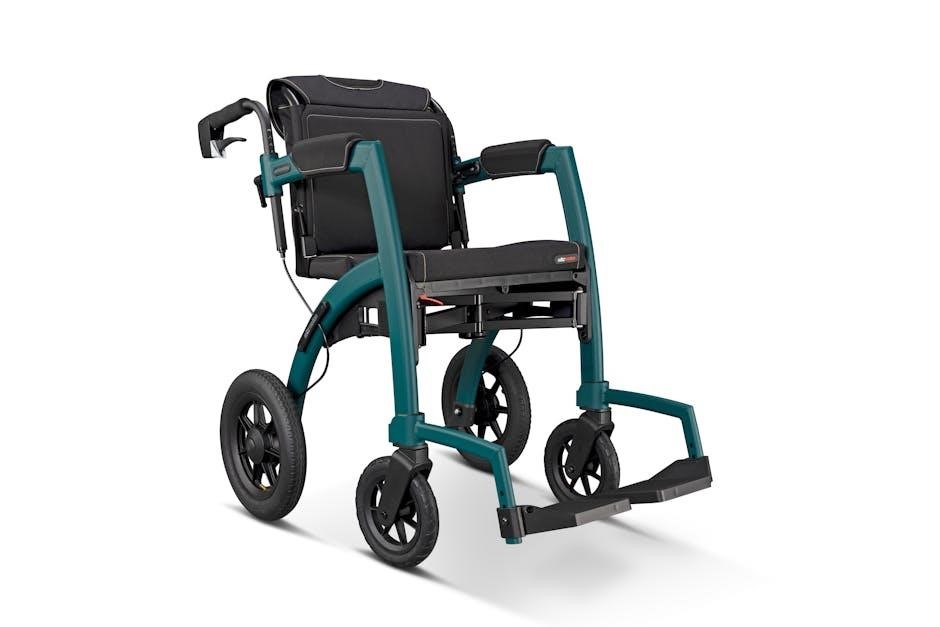
Accessible design necessitates specific doorway and hallway widths to accommodate wheelchair maneuverability. The Americans with Disabilities Act (ADA) guidelines stipulate a clear width of at least 32 inches for doorways. This measurement refers to the passage after the door is opened, accounting for swing space. Hallways should maintain a clear width of 36 inches to allow for comfortable passage and turning.
These dimensions are critical for independent navigation and prevent obstructions. Consideration must be given to protruding objects like door handles and light switches, ensuring they don’t impede the required clear width. Retrofitting existing spaces may require widening doorways or hallways to meet accessibility standards. Accurate measurement is vital before undertaking any modifications to guarantee compliance and usability for wheelchair users.

Wheelchair Standards & Regulations
Wheelchair strength, safety, and seating are governed by standards like ISO 16840-1:2006, ensuring quality and user well-being during operation.
ISO 16840-1:2006 ౼ Wheelchair Seating Standards
ISO 16840-1:2006 is a pivotal standard defining vocabulary, reference axis conventions, and crucial measures for body segments when assessing wheelchair seating.
This standard ensures consistency in wheelchair seating evaluations, promoting optimal postural support and pressure distribution for wheelchair users.
It establishes a common language and methodology for professionals involved in wheelchair prescription and fitting, enhancing communication and collaboration.
Key aspects covered include defining anatomical landmarks, establishing a reference coordinate system, and specifying methods for measuring seat dimensions.
Adherence to ISO 16840-1:2006 helps to minimize the risk of pressure sores, musculoskeletal discomfort, and other complications associated with improper seating.
The standard’s detailed guidelines contribute to improved wheelchair user function, independence, and overall quality of life through optimized seating solutions.
Ultimately, it provides a framework for creating seating systems tailored to individual needs, maximizing comfort, and promoting long-term health.
Wheelchair Strength & Safety Requirements
Wheelchair strength and safety are paramount, governed by rigorous standards to protect users from potential hazards during operation.
These requirements encompass static, impact, and fatigue testing, ensuring the wheelchair can withstand daily stresses and unexpected forces.
Standards dictate the wheelchair’s ability to bear weight, resist deformation, and maintain structural integrity under various conditions.
Testing protocols simulate real-world scenarios, such as navigating obstacles, encountering uneven terrain, and experiencing sudden stops.
Requirements also address braking system performance, wheel locking mechanisms, and frame stability to prevent accidental movement.
Compliance with these standards is crucial for manufacturers, demonstrating a commitment to user safety and product reliability.
Regular inspections and maintenance are essential to ensure the wheelchair continues to meet safety requirements throughout its lifespan.
Adhering to these guidelines minimizes the risk of injuries and promotes confidence for wheelchair users in their mobility devices.

Resources for Wheelchair Measurement & Fitting
Locate a qualified Assistive Technology Professional (ATP) for expert fitting, or utilize online sizing charts and manufacturer guides for assistance.
Finding a Qualified Assistive Technology Professional (ATP)
Selecting a Certified Assistive Technology Professional (ATP) is paramount for a precise wheelchair fitting, ensuring optimal comfort, functionality, and long-term health. ATPs possess specialized knowledge regarding wheelchair dimensions, seating, and positioning, going beyond basic measurements.
These professionals conduct comprehensive evaluations, considering individual needs, body morphology, and activity levels to recommend the most appropriate wheelchair and accessories. They are skilled in interpreting medical diagnoses and translating them into practical wheelchair specifications.
ATPs can be located through professional organizations like RESNA (Rehabilitation Engineering and Assistive Technology Society of North America) or by requesting referrals from physicians, therapists, or rehabilitation centers. Verify their credentials and experience before scheduling a consultation, prioritizing those with specific expertise in complex rehabilitation technology.
A thorough assessment by an ATP will significantly improve the user’s quality of life, preventing pressure sores, maximizing independence, and promoting proper posture.
Online Wheelchair Sizing Charts & Tools
Numerous online resources offer wheelchair sizing charts and tools to assist in preliminary measurements and estimations, though they shouldn’t replace a professional assessment. These digital aids typically guide users through key measurements like seat width, seat depth, and back height, providing suggested wheelchair sizes based on inputted data.
Manufacturers like Freedom Mobility Solutions often provide detailed sizing guides on their websites, tailored to their specific wheelchair models. However, remember that these are general recommendations and individual needs may vary significantly.
While convenient, online tools have limitations; they cannot account for unique body contours, postural asymmetries, or specific functional requirements. They serve best as a starting point for understanding basic sizing principles before consulting with an Assistive Technology Professional (ATP).
Always cross-reference information from multiple sources and prioritize a professional fitting to ensure optimal wheelchair configuration and user comfort.
Wheelchair Measurement Guides from Manufacturers
Wheelchair manufacturers frequently provide comprehensive measurement guides specifically designed for their product lines, offering detailed instructions and visual aids. These guides typically outline the essential measurements – seat width, depth, height, back height, and armrest height – crucial for a proper fit.
Freedom Mobility Solutions, for example, likely offers guides detailing how to accurately measure a user and correlate those measurements to their available wheelchair models. These resources often include diagrams illustrating correct measurement techniques and considerations for various body types.
However, it’s important to remember that manufacturer guides are tailored to their wheelchairs; sizing can vary between brands. Always prioritize understanding the underlying principles of wheelchair measurement rather than solely relying on a single manufacturer’s chart.
These guides are valuable supplements to a professional assessment, providing a deeper understanding of the specific features and sizing options available within a particular brand’s offerings.